
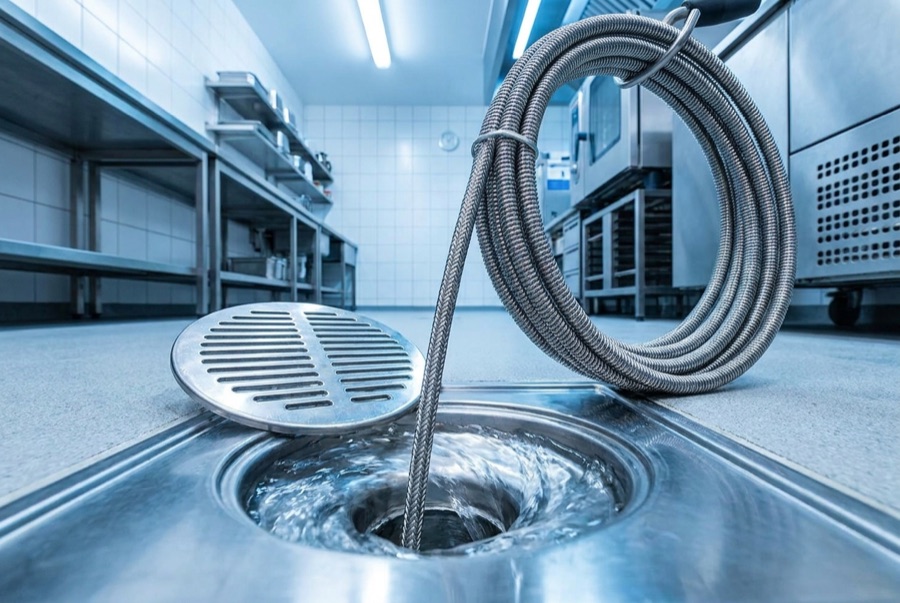
Grease trap cleaning means pumping out the fats, oils, and food waste that pack into your kitchen's trap before they clog your drain lines. Every Calgary restaurant needs it on a set schedule. Skip it, and you risk a backup during a busy shift.
What a Grease Trap Actually Does
A grease trap sits between your kitchen sinks and the city sewer. It slows the water down as it passes through. Fats and oils float to the top. Food bits sink to the bottom. Cleaner water flows out the middle toward the sewer. This keeps grease out of your pipes and out of Calgary's main lines. Most commercial kitchens use an indoor unit under the three compartment sink. Bigger spots run a large tank outside, buried near the back. Both do the same job. Both fill up over time.
Why Grease Traps Fill and Clog
Every fryer, griddle, and dish pit sends fats, oils, and grease down the drain. Plumbers call this FOG. Warm grease pours like liquid. Then it cools inside the trap and turns solid. Layer by layer, it packs together like candle wax. Alberta's cold makes this worse. A line near an exterior wall chills fast in winter. The grease hardens quicker and grips the pipe walls. Add coffee grounds, flour, and rice, and the trap fills faster than you think. Once it packs full, water has nowhere to go but back up.
Warning Signs Your Trap Is Overdue
Your kitchen will tell you when the trap is full. The trick is to catch it early. Watch for these signs during a busy shift:
- Sinks and floor drains empty slower than normal.
- A sour, rotten smell rises from the drains.
- Gurgling sounds come from the pipes under the sink.
- Water pools around floor drains or backs up.
- Grease shows at the top of the trap lid.
One sign is a warning. Two or more means call now. A trap that is more than one quarter full of grease and solids needs a pump.
How Often Should You Pump It?
The plain rule is the one quarter rule. Pump the trap once grease and solids fill 25 percent of it. Most Calgary kitchens hit that mark every one to three months. A busy burger joint or fryer heavy spot may need it monthly. A small cafe might go a full quarter. Trap size matters too. A little 40 pound indoor unit fills fast. A 1,000 gallon outdoor tank lasts longer. The City of Calgary also expects kitchens to keep pump records. A set schedule keeps you clean and keeps the paperwork ready.
The Real Cost of a Backup During Service
A grease backup never waits for a slow day. It hits during your dinner rush. Dirty water rises through the floor drains. The smell clears the dining room in minutes. You stop seating tables. Staff mop instead of serve. If a health inspector sees raw sewage on the floor, they can shut you down. One closed night costs more than a year of trap cleaning. A packed trap can also push grease into your main line and out to the street. That turns a small job into a dig.
Scheduled Treatment and Jetting Keep Lines Open
A pump empties the trap. It does not scrub the pipes. Grease still coats the drain lines that feed the trap. That coating shrinks the pipe and slows every sink. This is where regular drain cleaning earns its keep, since a clean line drains fast and stays clear longer. For lines already caked with hardened grease, high pressure hydro jetting cuts through the buildup and scours the pipe back to bare wall. A jetter blasts water at up to 4,000 psi. It clears grease that a cable snake would only poke a hole through. Pair a set pump schedule with a yearly jet, and your lines stay open through every rush.
When to Call RR Calgary
If your drains run slow or your trap smells, do not wait for the backup. A quick pump and a line check now saves a shut down later. RR Calgary Plumbing & Drains has served local kitchens since 1996. Our technicians are certified journeyman plumbers, so one team handles both your plumbing and your drains. You get one call, one crew, start to finish. There is no travel fee in Calgary, Airdrie, Cochrane, and Chestermere. Request service online or call (403) 250-2660. We will keep your kitchen open.